
Table of Contents
- What Are Dishwasher Detergent Pods and How Do They Work?
- Why Dishwasher Detergent Pods Outperform Traditional Powders and Liquids
- The Formulation Science Inside Modern Dishwasher Detergent Pods
- Comparative Analysis: Pods vs. Gel vs. Powder Detergents
- Best Practices: How to Store and Use Dishwasher Detergent Pods
- Contract Manufacturing and Private Label Opportunities
- Eco-Friendly Innovations in Dishwasher Detergent Pods
- Frequently Asked Questions (FAQ)
- Dishwasher detergent pods provide pre-measured convenience, high cleaning efficacy, and advanced multi-chamber technology for sparkling clean kitchenware.
- Multi-chamber capsules combine active enzymes, grease-cutting surfactants, and rinse aids to dissolve food soil without messy measuring or product waste.
- Modern manufacturing enables private-label brands to deliver sustainable, water-soluble solutions tailored for commercial and consumer markets alike.
Modern households and commercial food services demand cleaning solutions that deliver immaculate hygiene with zero guesswork. Over the last decade, dishwashing routines have evolved dramatically from bulky powders and runny liquids toward unit-dose technology.
Among these technological innovations, dishwasher detergent pods have become the preferred choice worldwide. These compact, all-in-one capsules simplify dishwashing while optimizing chemical dosing and water efficiency.
What Are Dishwasher Detergent Pods and How Do They Work?
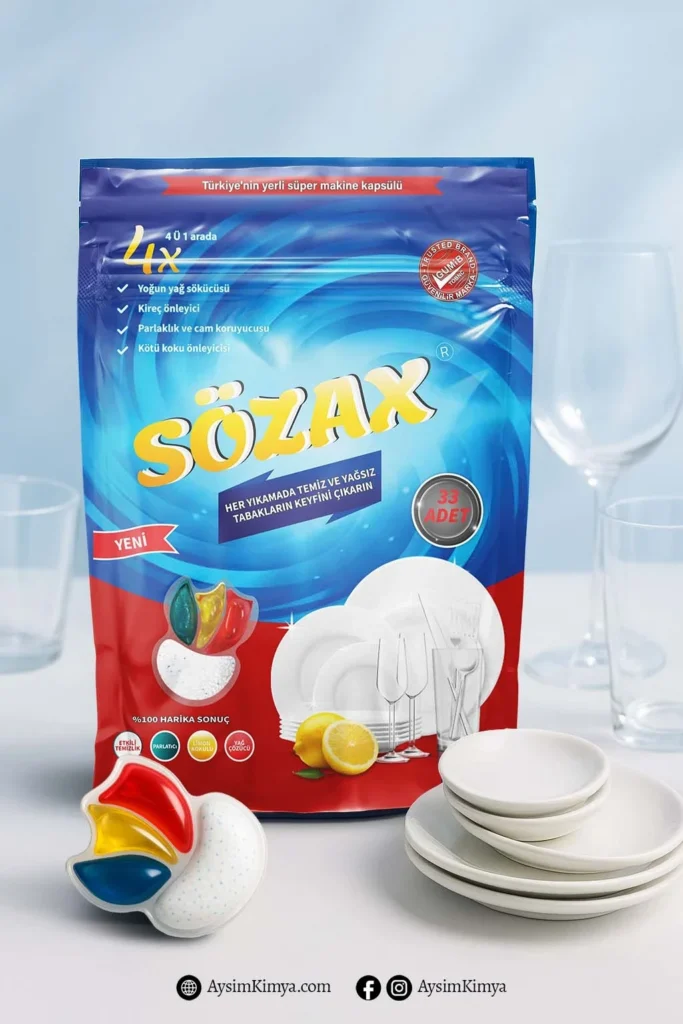
this service are single-dose packets encased in a biodegradable, water-soluble membrane. This membrane is typically made from polyvinyl alcohol, commonly known as PVA or PVOH.
When exposed to water during the wash cycle, the protective casing quickly dissolves. It releases precisely formulated cleaning ingredients at specific temperatures to break down greasy residues, proteins, and stubborn starches effortlessly.
Inside high-performance dishwasher detergent pods, you often find separated compartments. These chambers isolate sensitive enzymes from bleaching agents until the exact moment of water contact, maximizing formula potency throughout the cycle.
See our factory demonstrations exploring the manufacturing details of a bulaşık makinesi kapsülü:
Why Dishwasher Detergent Pods Outperform Traditional Powders and Liquids
One primary reason consumers choose these options is total elimination of measuring errors. Overdosing liquid or powder detergents leads to soapy deposits on glassware, while underdosing leaves greasy stains behind.
Every capsule delivers the optimal ratio of cleaning agents, water softeners, and rinse aids. This controlled dosing ensures repeatable dishwashing results regardless of load size or water hardness variations.
Furthermore, reliable these solutions reduce cabinet clutter and accidental kitchen spills. They eliminate sticky caps, clumping powders, and sticky measuring spoons, creating a cleaner and more efficient kitchen setup.
Retail consumers appreciate how compact and neat pods are. Brands that invest in private label formulations often source directly from top dishwasher tablet manufacturers to guarantee market-ready quality and strict performance benchmarks.
The Formulation Science Inside Modern Dishwasher Detergent Pods
Formulating effective this field requires sophisticated chemical balance. Unlike hand dishwashing liquids, automatic detergents must be low-foaming to prevent pump cavitation and machine drainage errors.
Modern pods feature multi-functional enzyme systems containing amylases and proteases. Amylase targets dried starches from rice, pasta, and potatoes, while protease hydrolyzes stubborn egg yolk and meat proteins cleanly.
In addition to active enzymes, this service integrate sodium percarbonate, which releases oxygen bleach during warm cycles. This component removes dark tannins found in tea, coffee, and wine stains without damaging delicate ceramics.
Understanding production engineering is vital for sustained quality. Formulators apply dishwasher tablet manufacturing 5 proven steps for ultimate quality to keep components stable until the wash cycle begins.
The Crucial Role of Water Softeners
Hard water contains elevated concentrations of calcium and magnesium ions. Left untreated, these minerals bind to dirt particles, create cloudy glassware films, and reduce overall detergent efficiency.
High-end these options include advanced sequestering builders and phosphonates. These agents bind hardness minerals instantly, allowing active surfactants to lift grease and food soils without mineral interference.
Rinse Aid and Shine Activators
No dishwashing cycle is complete without streak-free drying. Built-in rinse aids inside these solutions lower the surface tension of the rinse water significantly.
This allows water to sheet off plates and cutlery uniformly instead of forming droplets. As a result, dishes dry faster and emerge with brilliant shine, free from spots and streaks.
Comparative Analysis: Pods vs. Gel vs. Powder Detergents
When selecting the right format, buyers frequently weigh cost against convenience and overall cleaning strength. The following table highlights the core differences across major automatic dishwashing formats.
| Format | Dosing Precision | Grease & Stain Removal | Mess & Residue Risk | Storage Stability |
|---|---|---|---|---|
| Dishwasher Detergent Pods | High (Pre-measured unit dose) | Superior (Multi-chamber actives) | Minimal (Leaves zero dispenser residue) | High (Sealed against humidity) |
| Gel / Liquid Detergent | Moderate (Manual pour) | Moderate (Lacks bleaching power) | Moderate (Sticky bottles and drips) | Moderate (Separation over time) |
| Powder Detergent | Low (Manual scoop) | Good on stains (Bleach-rich) | High (Prone to clumping in humid air) | Low (Hardens with moisture) |
As illustrated above, this field consistently score highest across cleaning power, operational convenience, and modern consumer satisfaction.
Best Practices: How to Store and Use Dishwasher Detergent Pods
Using these unit doses correctly ensures you get optimal cleaning performance during every cycle. Always insert your this service into the designated dry dispenser compartment rather than tossing them directly onto the machine floor.
If placed loosely on the floor of the machine, the pod may dissolve during the initial cold pre-wash. This wastes the concentrated active ingredients before the main cleaning cycle even begins.
Always handle pods with dry hands. Since the polyvinyl alcohol film reacts swiftly to ambient moisture, handling these options with wet fingers can compromise the outer casing.
Keep the product container sealed tightly and stored in a cool, dry area away from direct sunlight. Modern child-safe closures prevent accidental access while protecting the pods from excessive humidity.
Troubleshooting Undissolved Capsules
Occasionally, consumers report partially dissolved pods resting inside the detergent door. This issue typically points to an obstructed dispenser flap caused by tall plates or oversized cookware.
Low water temperature can also slow down membrane dissolution. Modern these solutions require water temperatures around 45°C to 65°C to completely dissolve the exterior pouch and release their cleaning agents.
Contract Manufacturing and Private Label Opportunities
The global retail market for unit-dose detergents continues to experience rapid growth. Supermarket chains and homecare brands seek experienced chemical manufacturers to produce customized this field under private label agreements.
Ayşim Kimya engineers advanced formulations matching international performance benchmarks. Our facilities blend state-of-the-art multi-chamber encapsulating lines with rigorous chemical stability testing for reliable cleaning outcomes.
Whether you require enzyme-enhanced cleaning, phosphate-free compliance, or custom fragrance profiles, tailored this service offer exceptional brand differentiation for enterprise clients.
With agile manufacturing setups, private brands can introduce market-tested products quickly. Custom packaging designs, including child-resistant pouches and recyclable tubs, satisfy demanding modern retail distribution standards.
Eco-Friendly Innovations in Dishwasher Detergent Pods
Sustainability has evolved from a niche preference into an industry standard. Today’s commercial consumers actively look for these options formulated without phosphates, chlorine, or non-biodegradable fillers.
The water-soluble PVOH films used in quality pods break down into carbon dioxide and water through natural bacterial action in wastewater treatment plants, leaving zero microplastic residues behind.
Concentrated formulas also reduce overall product volume and shipping weights. This significantly lowers carbon emissions associated with long-distance freight and commercial logistics across distribution networks.
By selecting eco-conscious, enzyme-rich these solutions, end users achieve pristine tableware while minimizing chemical runoff into municipal aquatic ecosystems.
Frequently Asked Questions (FAQ)
Can I place dishwasher detergent pods directly into the bottom of the tub?
It is recommended to always place dishwasher detergent pods inside the dry main wash dispenser cup. Placing them directly on the bottom causes the pod to dissolve during the early pre-wash, leaving inadequate soap for the main wash cycle.
Do dishwasher detergent pods expire or lose their cleaning strength?
Most commercial this field remain fully effective for approximately 15 to 24 months. Over prolonged periods, exposure to moisture and warmth can degrade enzymes and weaken the water-soluble film.
Are dishwasher detergent pods safe for septic systems?
Yes, quality this service formulated without harsh chlorine bleach or phosphates are completely safe for standard household septic tanks and municipal wastewater systems.
Dishwasher Tablet Prices: 7 Best Ways to Save Money with Proven Deals in 2026